
Face Lift in Singapore
Why Choose Astrid for Face Lift
- Our plastic surgeons have experience in facial rejuvenation and reconstructive surgery, with an in-depth understanding of facial anatomy and tissue relationships.
- Conventional and endoscopic face lift approaches are available, with the technique tailored to the location and degree of tissue laxity and the aim of achieving natural-looking results.
What Is a Face Lift?
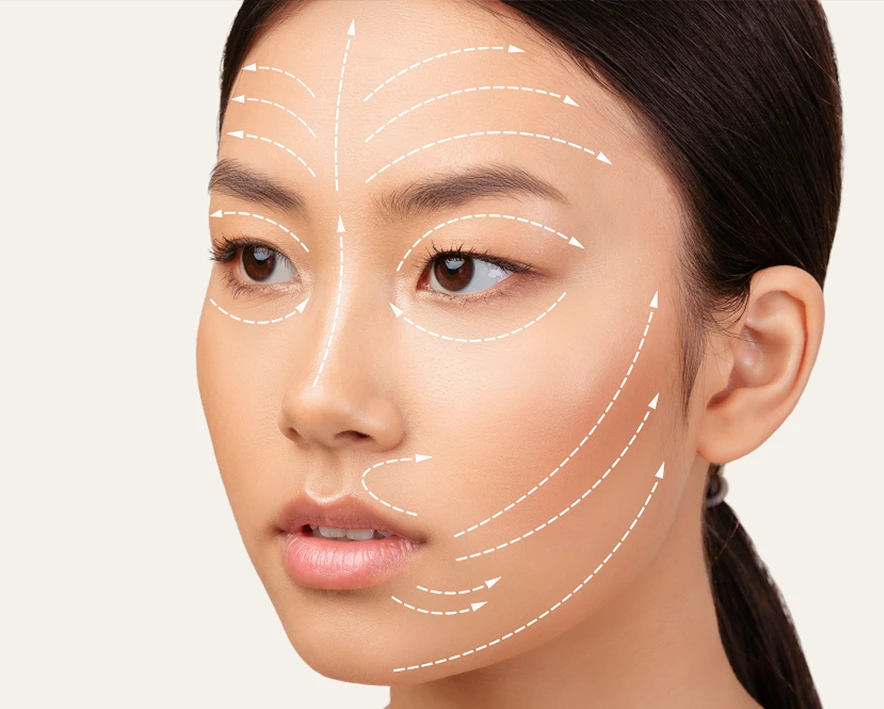
A face lift, or rhytidectomy, is a surgical procedure that repositions facial tissues to address changes associated with ageing. Depending on the type of face lift performed, surgery may target the midface, lower face or multiple areas of the face.
What Can a Face Lift Address?
A face lift may be used to address:
- Jowls and reduced jawline definition
- Loose or sagging skin along the lower face
- Descent of the cheeks and deeper facial tissues
- Deepened folds associated with tissue descent
A face lift does not directly address concerns such as brow descent, eyelid ageing or skin texture.
How Does a Face Lift Work?
During a face lift, the deeper tissues of the face are repositioned and supported, while excess skin is adjusted to follow the new facial contours. Incisions are typically placed around the ears and may extend into the hairline, depending on the technique and extent of correction required.
In selected cases, an endoscopic approach may be used. This involves inserting a small camera through shorter incisions to guide the repositioning of deeper facial tissues.
The aim is to restore facial contours by addressing both the skin and underlying tissues rather than tightening the skin alone.
Understanding Your Face Lift Options
Face lift surgery can target different areas of the face depending on where tissue descent and laxity are most noticeable.
- Full Face Lift: Addresses more extensive ageing changes across the face, including tissue descent and laxity affecting multiple facial areas.
- Midface Lift: Repositions descended tissues in the cheek and midface to restore support and contour in this area.
- Lower Face Lift: Focuses on the lower face and jawline, including concerns such as jowls and reduced jawline definition.
- Mini Face Lift: A less extensive face lift that typically focuses on mild to moderate laxity of the lower face and jawline.
- Endoscopic Face Lift: Uses an endoscope and smaller incisions to reposition deeper facial tissues, typically in selected areas such as the midface.
Who Is Suitable for a Face Lift?
A face lift may be suitable if you have:
- Jowls or reduced definition along the jawline
- Loose or sagging skin affecting the lower face
- Facial tissue descent that may not be adequately addressed with non-surgical treatments
- Realistic expectations about the changes that face lift surgery can achieve
Need-to-Know

3–5 hours

General anaesthesia

Day surgery or overnight stay

Up to 2 weeks

Up to 6 weeks
Often Done with
Complementary procedures commonly performed alongside a face lift include:
FAQs About Face Lifts
Where are face lift scars located?
How long do face lift results last?
Will a face lift change the way I look?
How long does swelling last after a face lift?
How can we help?
