

Radiofrequency-Assisted Lipolysis (RFAL) in Singapore
Why Choose Astrid for RFAL
- Performed by experienced plastic surgeons with expertise in both minimally invasive and surgical facial and body contouring.
- Access to advanced radiofrequency-assistent contouring technologies designed for precise treatment across the face, neck and body.
- Comprehensive facial and body contouring procedures allow treatment recommendations to be tailored to your goals.
Understanding RFAL and Its Benefits
Radiofrequency-assisted lipolysis (RFAL) is a minimally invasive facial and body contouring procedure that combines radiofrequency energy with fat removal. The radiofrequency energy heats the targeted tissues, helping to break down fat while promoting tissue contraction and collagen production. Potential benefits of RFAL include:
Potential benefits of RFAL include:
- Addresses both localised fat and skin laxity in one procedure
- Small incisions for a minimally invasive approach
- Reduced downtime compared with more extensive facial or body contouring surgery
- Progressive skin tightening as collagen production continues after treatment
- Versatile treatment areas, with RFAL suitable for selected areas of both the face and body
Who Is Suitable for RFAL?
RFAL may be suitable for individuals with localised fat and mild to moderate skin laxity who are looking for a less invasive approach to facial or body contouring.
You may be a suitable candidate if you:
- Have mild to moderate loose skin in the treatment area
- Have localised fat that you would like to reduce
- Are in good general health
- Have realistic expectations of what RFAL can achieve
For facial RFAL, this may include patients concerned about early jowling or reduced definition around the chin and jawline. For body RFAL, it may include those with stubborn fat and skin laxity affecting different areas of the body.
RFAL is not a weight loss treatment and may not be suitable for significant skin laxity. In these cases, more extensive procedures such as a face lift, neck lift or body contouring may be more appropriate.
What Happens During an RFAL Procedure?
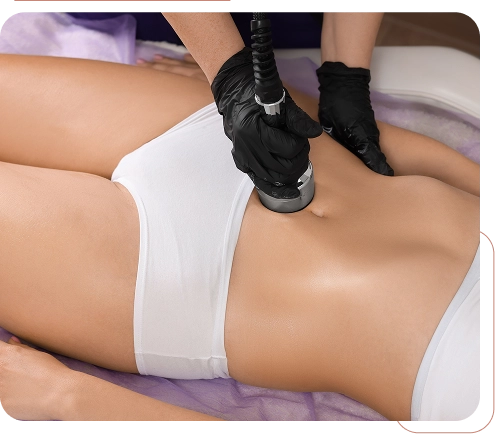
RFAL is performed using a specialised probe that delivers controlled radiofrequency energy beneath the skin while allowing unwanted fat to be removed. The exact treatment process will vary depending on the area being treated and the extent of contouring required.
| Steps | Description |
|---|---|
| Steps 1. Consultation and Treatment Planning | Description Your plastic surgeon assesses the treatment area, including fat distribution, skin laxity and overall contours, and discusses your goals to determine whether RFAL is suitable and plan the areas for treatment. |
| Steps 2. Anaesthesia | Description Depending on the treatment area and extent of contouring required, RFAL may be performed under local anaesthesia with sedation or general anaesthesia to keep you comfortable throughout the procedure. |
| Steps 3. Radiofrequency Treatment | Description Small incisions allow the RFAL probe to be inserted beneath the skin. Controlled radiofrequency energy heats the targeted tissues, helping to liquefy fat while promoting tissue contraction. |
| Steps 4. Fat Removal and Contouring | Description The treated fat is carefully removed through a cannula. Your plastic surgeon contours the treatment area to reduce localised fat and create smoother, more proportionate facial or body contours. |
| Steps 5. Recovery | Description Swelling, bruising and temporary discomfort can be expected after treatment. Depending on the area treated, a compression garment may be recommended to support healing and help manage swelling. |
Need-to-Know

1 - 3 hours

Local anaesthesia with sedation or general anaesthesia

Day surgery

Up to 1 week

Up to 2 weeks
Often Done with
Depending on the treatment area and your individual goals, RFAL may be performed alongside other facial or body contouring procedures.
Face and Neck
- Face Lift
- Neck Lift
- Chin Liposuction
- Fat Grafting
- Buccal Fat Removal
- Non-Surgical Facial Beautification
Body
- Fat Grafting
- Tummy Tuck (abdominoplasty)
- Brachioplasty (arm lift)
- Thigh Lift
RFAL vs. Traditional Liposuction: What's the Difference?
Traditional liposuction and radiofrequency-assisted lipolysis (RFAL) can both be used to address localised fat and improve body contours, but they differ in the technology used and their effects on the surrounding tissues.
| Feature | Traditional Liposuction | RFAL (Radiofrequency-Assisted Lipolysis) |
|---|---|---|
| Primary Purpose | Traditional Liposuction Removal of localised fat | RFAL (Radiofrequency-Assisted Lipolysis) Fat reduction with additional skin and tissue tightening |
| Technology | Traditional Liposuction Fat is removed using a suction cannula | RFAL (Radiofrequency-Assisted Lipolysis) Radiofrequency energy is combined with fat removal |
| How It Works | Traditional Liposuction Fat is mechanically loosened before being removed through a cannula | RFAL (Radiofrequency-Assisted Lipolysis) Radiofrequency energy heats the targeted tissues before the treated fat is removed |
| Skin Tightening | Traditional Liposuction Relies largely on the skin's natural ability to contract after fat removal | RFAL (Radiofrequency-Assisted Lipolysis) Radiofrequency energy promotes tissue contraction and stimulates collagen production |
| Treatment Areas | Traditional Liposuction Can be used on selected areas of the face and body | RFAL (Radiofrequency-Assisted Lipolysis) Can be used on selected areas of the face and body, particularly where additional tissue contraction is desired |
| Anaesthesia | Traditional Liposuction Depends on the treatment area and extent of liposuction | RFAL (Radiofrequency-Assisted Lipolysis) Depends on the treatment area and extent of RFAL |
| Incisions | Traditional Liposuction Small incisions are made for insertion of the liposuction cannula | RFAL (Radiofrequency-Assisted Lipolysis) Small incisions are made for insertion of the RFAL probe and fat removal |
| Results | Traditional Liposuction Contour changes become more apparent as post-operative swelling subsides | RFAL (Radiofrequency-Assisted Lipolysis) Contour changes become more apparent as swelling subsides, while tissue tightening may continue progressively over the following months |
FAQs About RFAL
Will RFAL leave visible scars?
When will I see the results from RFAL?
How long do RFAL results last?
Meet the Specialists Behind Your Care
Meet the specialist plastic surgeons behind Astrid Plastic Surgery, bringing expertise across cosmetic, reconstructive, microsurgical and paediatric plastic surgery.

Medical Director & Consultant Plastic Surgeon
MBBS, MRCS, MMed, FAMS (Plastic Surgery)
Dr Jonah Kua is a consultant plastic surgeon with expertise in cosmetic and reconstructive plastic surgery, including eyelid surgery, rhinoplasty, breast surgery, body contouring and microsurgical reconstruction. Former Head of Plastic Surgery Service at Changi General Hospital and National Programme Director in Plastic Surgery, Singapore, he is committed to providing honest, evidence-based recommendations while tailoring every treatment plan to each patient's anatomy, concerns and desired outcomes.

Medical Director & Consultant Plastic Surgeon
MBBS, MRCS, MMed, FAMS (Plastic Surgery)
Dr Chia Hui Ling is a consultant plastic surgeon with expertise in cosmetic and reconstructive plastic surgery, including breast surgery, facial rejuvenation, paediatric plastic surgery and microsurgical reconstruction. A former consultant plastic surgeon at KK Women's and Children's Hospital and co-founder of Breast Reconstruction Awareness Singapore (BRAS), she is known for her warm, meticulous approach and helps patients feel informed and confident throughout their care.
How can we help?
