

Facial Reconstruction in Singapore
Why Choose Astrid for Facial Reconstruction
- Our plastic surgeons are trained in microsurgery and have experience in reconstructing facial defects involving different areas and tissue requirements.
- Reconstruction is planned around the location and extent of the defect, with consideration given to the function and form of the affected facial area.
What Is Facial Reconstruction?
Facial reconstruction refers to procedures used to repair areas of the face affected by tissue loss or damage. Depending on the defect, reconstruction may involve replacing the skin or deeper soft tissue to restore coverage while addressing the function and shape of the affected area.
When May Facial Reconstruction Be Needed?
Facial reconstruction may be considered when a defect cannot be adequately repaired through direct closure alone. This may occur:
- Following the removal of a tumour or other lesion
- After a significant facial injury involving tissue loss
- When a previous operation has left a facial defect that requires reconstruction
What Areas of the Face Can Be Reconstructed?
Reconstruction may be performed on different areas of the face depending on where tissue has been lost or damaged. This can include the nose, lips, cheeks and other facial soft tissues.

How Is Facial Reconstruction Planned?
Facial reconstruction is planned according to the defect and the requirements of the affected part of the face. The aim is to provide adequate tissue coverage while considering how the reconstruction may affect the function and shape of that area.
Your plastic surgeon will assess factors such as:
- The location and extent of the defect
- The type and amount of tissue that needs to be replaced
- The functional requirements of the affected facial area
- The availability of suitable nearby or donor tissue
For example, reconstruction around the mouth may need to account for movement and oral function, while reconstruction of the nose may need to consider its external structure and the nasal airway.
These considerations help determine whether the defect is best reconstructed using nearby tissue, a skin graft or tissue transferred from another part of the body.
Understanding Your Facial Reconstruction Options
The technique used for facial reconstruction depends on the size and location of the defect, the tissues involved and the amount of tissue needed for repair. At Astrid Plastic Surgery, reconstructive options include:
- Local Flaps: Tissue next to the defect is repositioned to cover the affected area while remaining connected to its existing blood supply.
- Skin Grafts: A layer of skin is taken from another part of the body and placed over the defect. The graft relies on the recipient area to establish a new blood supply as it heals.
- Free-Flap Reconstruction: Tissue is transferred from another part of the body together with its blood vessels to reconstruct a larger or more complex facial defect. The transferred blood vessels are connected to vessels near the reconstruction site using microsurgical techniques.
Need-to-Know
Local Flap
Procedure Time 1–4 hours
Anaesthesia Local or general anaesthesia
Hospitalisation Day surgery to 3 days
Downtime 1–3 weeks
Recovery 4–8 weeks
Skin Graft
Procedure Time 1–3 hours
Anaesthesia Local or general anaesthesia
Hospitalisation Day surgery to 3 days
Downtime 1–3 weeks
Recovery 4–8 weeks
Free-Flap Reconstruction
Procedure Time 6–12+ hours
Anaesthesia General anaesthesia
Hospitalisation 5–14 days
Downtime 4–8 weeks
Recovery 3–6 months
These are general estimates. Procedure time, hospitalisation and recovery can vary depending on the location and extent of the facial defect, the reconstruction required and whether other procedures are performed at the same time.
What to Expect After Facial Reconstruction
Swelling and bruising around the reconstructed area can be expected initially, and the appearance of the face will continue to change as healing progresses. During recovery:
- A flap or skin graft will need time to heal at the reconstruction site and may require wound care during the initial recovery period.
- Temporary tightness or changes in movement may occur depending on the area of the face reconstructed.
- If tissue is transferred from another part of the body, the donor site will also need time to heal.
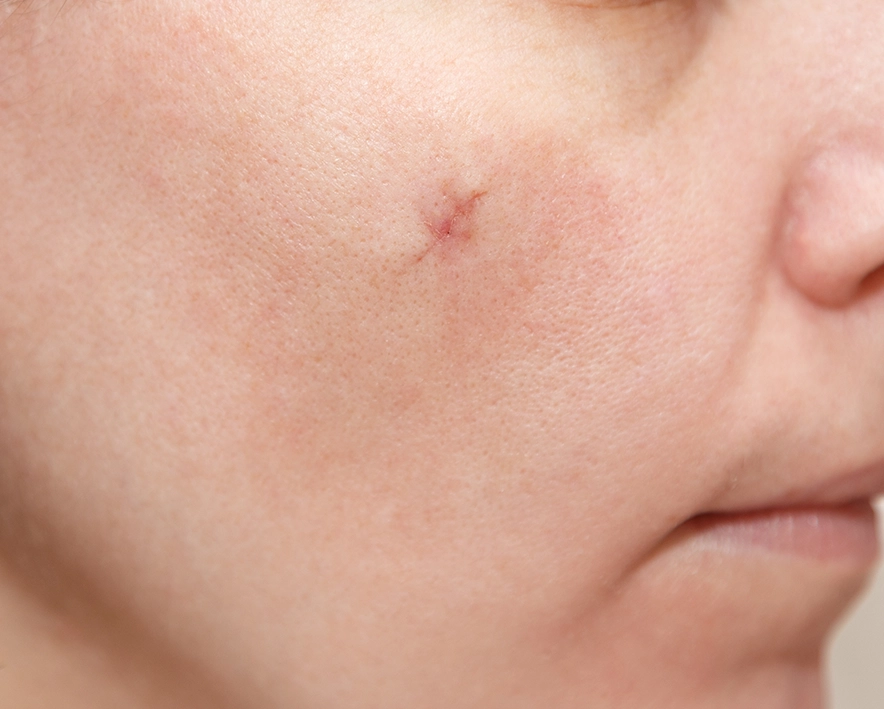
- Scars may initially appear more noticeable before gradually maturing over time.
The final appearance cannot usually be assessed during the early stages of recovery. Swelling can continue to settle and scars can mature for several months, particularly after more extensive reconstruction.
FAQs About Facial Reconstruction
Will my face look the same after facial reconstruction?
Will facial reconstruction affect facial movement?
Can facial reconstruction be performed after a previous operation?
How can we help?
